The Gate of Lamentation: Bab el-Mandeb, Chokepoints and Global Interconnected Crisis
Dr. Rachel Ainsworth
Research Director for SoDy
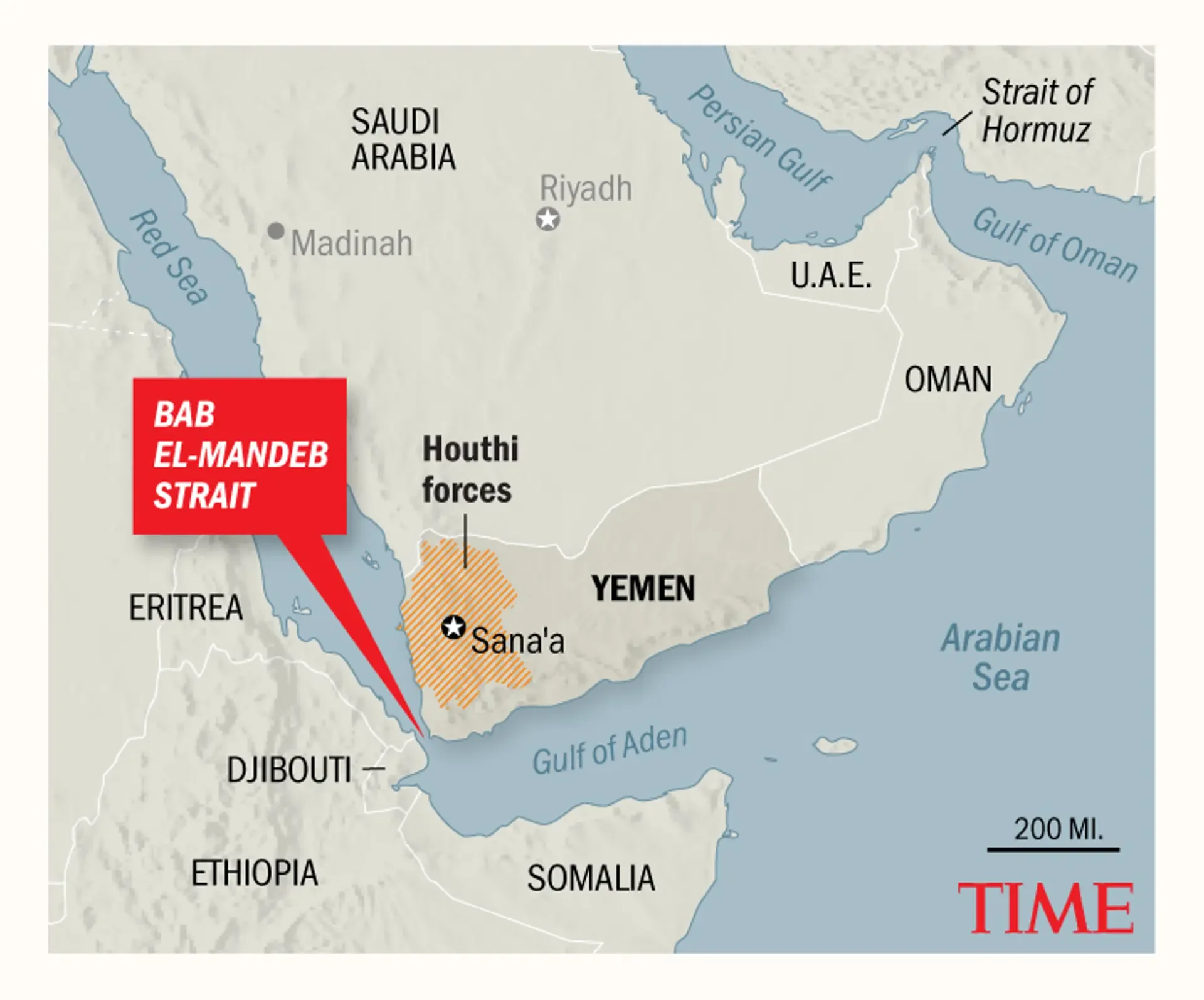
Map of the Red Sea showing the Bab el-Mandeb Strait. (source)
The Red Sea, and particularly the narrow Bab el-Mandeb Strait, has historically played a vital role in economic trade and in turn been a strategic area in terms of geopolitics. In the Greco-Roman world, the area was where African and Arabian trade converged, facilitating the exchange of valuable spices and aromatics, like myrrh, tortoise shells and ivory. In the medieval period the Red Sea was hub for navigation. Writers such as Ahmad ibn Majid wrote technical treaties on the wind, coral reefs, currents and surrounding islands, developing the knowledge around sailing practices and the region’s geography allowing for expansions of trade networks.
Importantly, global expansions of trade also led to escalations in naval conflicts between different powers like the Ottoman and the Portuguese Empires. For the Ottomans the Red Sea was vital to protect regional commerce networks and significant religious sites such as Mecca and Medina while the Portuguese vied to control lucrative spice routes and larger Indian Ocean shipping. With the establishment of the Suez Canal in 1869, the Red Sea became the pivotal gateway to the Mediterranean Sea and the Indian Ocean. Its strategic importance remained critical during both World Wars, as the Allies – particularly Britain – relied on the Red Sea to move troops from India, New Zealand and Australia, and later, during the Second World War, to secure access to oil. During the Yom Kippur War of 1973, the Arab countries within the Oil Producing Economic Community (OPEC) agreed to the closing of the strait to Israeli oil shipping. As evident throughout this long-sustained history, all major global actors throughout different periods of time, have recognized the importance of the Red Sea as a strategic trade point and those who control it wield significant economic power and leverage. As in the past, the Red Sea and the Bab el-Mandeb Strait – whose name means the “Gate of Lamentation” or “Gate of Grief” – remain a central trade shipping route and chokepoint that holds substantial political and economic importance in today’s globalized world.
The war between the United States and Iran has now entered its seventh month, with no clear off-ramp insight. It has effectively closed the Strait of Hormuz, despite U.S. military claims, through which around 20 percent of global oil – trade – as well as a significant proportion of liquid natural gas (LNG) and fertiliser – passed before the conflict. The theatre of war has also expanded to Lebanon and the Gulf States, with wider implications for the global economy, food security and humanitarian conditions, particularly due to the devastations of displacement. With Iranian-backed Houthi rebels in Yemen now securing key areas including Al-Khawkhah, Hays, Mocha, Dhubab, the Greater and Lesser Hanish islands and Mayyun or Perim Island, the group has consolidated its hold over the Bab el-Mandeb Strait, enabling it to exert control over shipping at the entrance to the Red Sea. Before these tensions erupted, 12 percent of global trade flowed through the Bab el-Mandeb Strait with 11 percent of maritime oil and 8 percent of LNG. For Saudi Arabia the Red Sea has become ever more important as a route to ship its crude oil due to the closure of the Strait of Hormuz. Saudi Arabia therefore ships its oil through its Petroline or East-West pipeline from the eastern city of Abqaiq to the port of Yanbu on the Red Sea. A Houthi-controlled Bab el Mandeb Strait could therefore create a second regional chokepoint, compounding the disruption in the Strait of Hormuz and expose how crises in one corridor can reverberate through global trade networks, food security, energy sectors, environments, and global politics. In a world of entanglements, the question is not only how did we get to this point, but also how these overlapping pressures permeate across borders amplifying one another.
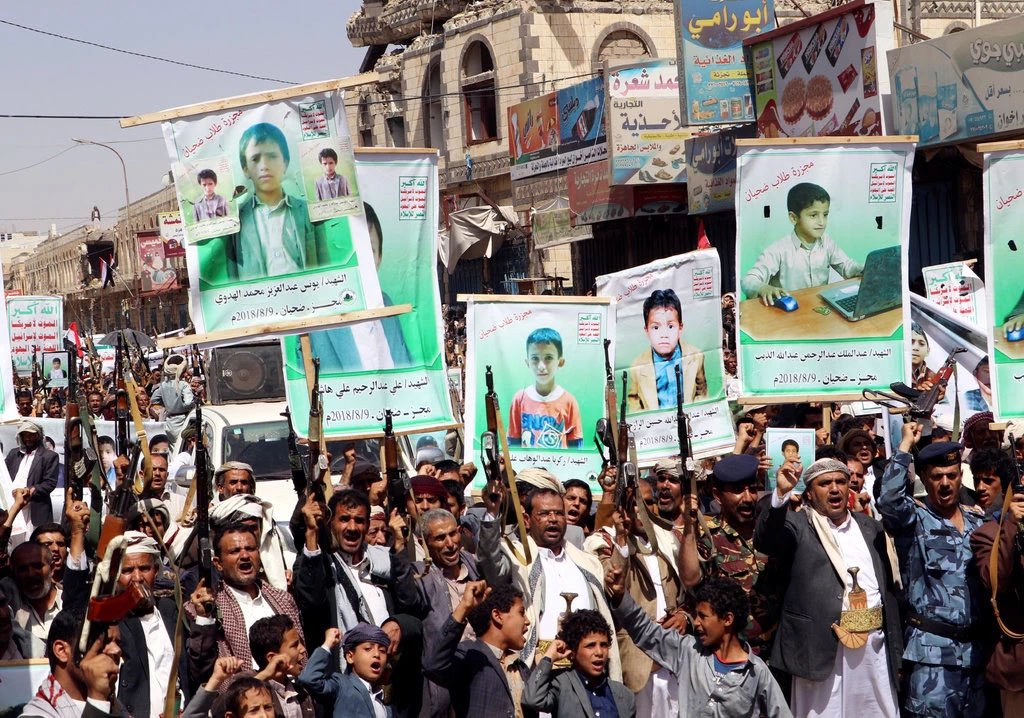
Houthi demonstrators denouncing an offer by the Saudi-led coalition to pay compensation for victims of an airstrike in Yemen in early September 2018. (source)
Yemen’s 12 Years of Conflict
Yemen has been mired in civil war since 2014, although fighting has reduced since a UN-brokered truce in 2022. The Houthi movement, also known as Ansar Allah, or “Supporters of God”, emerged in the 1990s, while its Zaydi Shiite militant wing began fighting Yemen’s government in 2004. The 2011 Arab Spring marked a crucial turning point. After President Ali Abdullah Saleh was ousted, a caretaker government led by Abd Rabbu Mansour Hadi took power with Saudi backing. When Hadi attempted constitutional reforms, Houthi forces opposed his appointment, seized territory in northern Yemen, and captured the capital, Sana’a, in 2014, forcing Hadi to flee to Saudi Arabia and continued his rule from Riyadh. In March 2015, Saudi Arabia directly intervened leading a coalition with the United Arab Emirates against the Houthis. Because the Houthis are backed by Iran and form part of Iran’s “Axis of Resistance”, the conflict widened into a proxy war between Saudi Arabia and Iran and their allies, with repercussions across the Middle East.
While Hadi’s internationally recognized government coalition operated from exile in Saudia Arabia, Yemen’s internal political landscape was further complicated by the emergence of the Southern Transitional Council (STC), a separatist group established in 2017 that sought to restore the pre-1990 division between northern and southern Yemeni states. Fighting also continued and intensified in 2018 and 2019, as the Houthis targeted Saudi oil tankers and energy facilities inside Saudi Arabia. In 2020, the UAE withdrew from the Saudi-backed coalition, although it continued to shape developments in the country through local actors. Houthi attacks on Saudi oil infrastructure and civilian airports persisted, and in 2022 the group launched drone and missile strikes against the UAE. That same year, Hadi stepped down as president and transferred power to the Presidential Leadership Council (PLC), an eight-member council body made up of politicians across Yemen. The PLC became the globally recognized Yemeni government and presented itself as an anti-Houthi force supported by Saudi Arabia. A UN-mediated truce in 2022 reduced fighting, although hostilities continued to sporadically flare. In 2023, China led negotiations between Saudia Arabia and Iran aimed at creating a diplomatic path to ending the war in Yemen. From November 2023, Houthi rebels began targeting Western linked vessels in the Bab el-Mandeb Strait in protest of Israel’s war against Hamas in Gaza, forcing many ships to divert around the Cape of Good Hope, increasing shipping costs and raising global trade prices. Internal fighting within Yemen also continued. In 2025, the STC, with UAE backing, pushed into PLC government held territory to expand its influence, before the PLC and Saudis forced the STC out of those regions. In January 2026, the PLC and Saudi Arabia made the STC disband.
Tragically, Yemen’s civil war has had shattering humanitarian consequences. Due to years of conflict which has also led to an economic crisis in the country, more than 18.2 million people depend on humanitarian assistance. Moreover, around 4.5 million people have been internally displaced and have been in a protracted displacement situation which has been deepened with climate related risks such as droughts and floods. Conflict has also complicated aid assistance leading to food shortages where around 5 million people are in famine.
In a recent offensive, the Houthis captured the Hays and Al-Khawkhah districts on September 9th. The following day, they seized the port city of Mocha, a historically important trading hub for coffee in the early modern period and the origin of the name “Moka” coffee. By September 11th, Houthi forces entered the coastal city of Dhubab, enabling them to capture Perim Island and effectively control the Bab el-Mandeb Strait. Their control of the Greater and Lesser Hanish Islands, just north of Perim, further deepen their hold over the entrance to the Red Sea. At the same time, the Houthis have also sought to advance into Marib, east of Sana’a, which remains under PLC government control. The area around Marib is strategically important because the city is a key economic center for oil and gas production.
Concurrently, the Houthis have also targeted Saudi military sites like the King Khalid airbase, and oil facilities which have injured 73 people in Saudi Arabia. These attacks were in response to Saudi airstrikes on the Houthis. Saudi Arabia has also faced severe damage to its East-West oil pipeline on September 10th causing Aramco to suspend oil production due to a drone attack coming from Iraq by an Iranian allied Iraqi militia. The repairs to the pipeline could take weeks or even months to fix. Furthermore, in this recent escalation of hostilities around 100,000 people have been displaced while over 2,500 people have fled to Djibouti to escape renewed conflict.
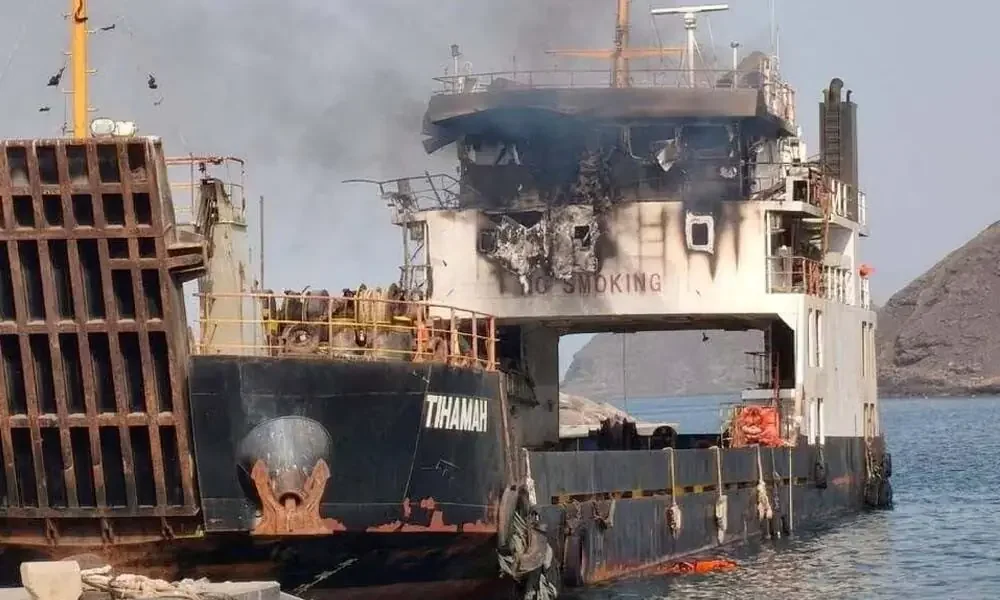
Four crew members were killed and the ship sustained major damage after the cargo vessel, Tihamah was attacked by Houthi forces in the Bab el-Mandeb Strait near Murad, Yemen, August 11, 2026. (source)
Geopolitical Implications for Saudi Arabia and the U.S.
While the Houthis have noted that maritime traffic in the Bab el-Mandeb strait can continue as normal and that they will only be targeting Saudi vessels, the ripple effects have potential for wide-reaching consequences.
With the Strait of Hormuz effectively shut, Saudi Arabia has had to rely more heavily on its East-West pipeline to sustain oil exports. Before the conflict, the pipeline could move between four and five million barrels of oil per day to the Red Sea, supporting roughly 5 percent of global oil supply. It’s shut down therefore places Saudi Arabia under severe pressure. The country’s exportable reserves have already been weakened by the U.S.-Israel-Iran War, and available stocks at the western port of Yanbu are reportedly sufficient for only five to seven days. Brent crude prices are now well above $100 a barrel, raising fears of further price surges and wider economic shocks if the disruption continues. To offset losses from the damaged pipeline and instability in the Red Sea, some analysts warn that Saudi Arabia may increasingly depend on dark shipments of oil through the Strait of Hormuz. These involve vessels switching off their Automatic Identification System (AIS), obscuring their identity, ownership and location. While this practice might help evade detection, it also heightens various risks for crews operating in conflict zones and poses serious environmental dangers, particularly if tankers carrying oil or chemical products are damaged and contaminate marine environments.
With the Iran-backed Houthi rebels in charge of the opening of the Red Sea more pressure is applied on the U.S and Saudi Arabia. Iran and its allies in its “Axis of Resistance” now exert powerful leverage giving a major upper hand to Iran. Now, however, the Trump administration, who have repeatedly demonstrated their lack of geopolitical strategy, will have to think about how to respond, especially considering that the U.S. and the Houthis entered a ceasefire agreement in 2025. Saudi Arabia is a key ally of the U.S. especially in its war with Iran. The U.S. has military personnel in Saudi Arabia, and both perform joint airstrikes and share military capabilities in the war. As of writing, the U.S. has decided not to come to the aid of the Saudis, despite their appeals. Now Saudi Arabia faces a two-sided struggle with Iran and the Iranian-backed Houthis. It is possible that Saudi Arabia will seek a broader coalition with Turkey and Pakistan to thwart Houthi advances. However, if a Saudi led anti-Houthi operation fails, there could be a scenario where Saudi Arabia must come towards a diplomatic solution with Iran which would greatly impact the U.S.’s positioning in the war.
Two Chokepoints and Cascading Crises
In our deeply connected world, the simultaneous closure of the Strait of Hormuz and the Bab el-Mandeb Strait would not only intensify rising fuel costs and cost-of-living crises worldwide, but also place severe strain on global food systems, humanitarian assistance and destabilize political systems.
Phosphate fertilizers and the urea trade, used for nitrogen fertilizers, have already been negatively affected by the U.S.-Israel conflict with Iran. Before the war one third of chemicals and fertilizers passed through the Strait of Hormuz. Similarly, the Bab el-Mandeb Strait is key route for global food where European wheat is exported and rice from India passes, ultimately causing a similar global impact.
As oil prices rise amid war disruptions, fertilizer costs have also increased, creating heightened vulnerability for import-dependent countries. When the conflict broke out earlier in the year, fertilizer shipments were halted just as the Northern Hemisphere entered its planting season. By April 2026, urea prices peaked at $857 per tonne. Limited access to fertilizer, combined with higher prices, could significantly reduce crop yields, affecting both food prices and availability in 2027. These pressures are further reinforced by disruptions linked to the war in Ukraine, including Russian attacks on vessels in the Red Sea, as well as the expected emergence of a strong El Niño this autumn and winter which will likely affect harvests around the world. In terms of global shipping El Niño will also interrupt the vessel traffic of the Panama Canal with lack of rain fall due to extreme weather adding to the disruption caused by the U.S.-Israel-Iran War.
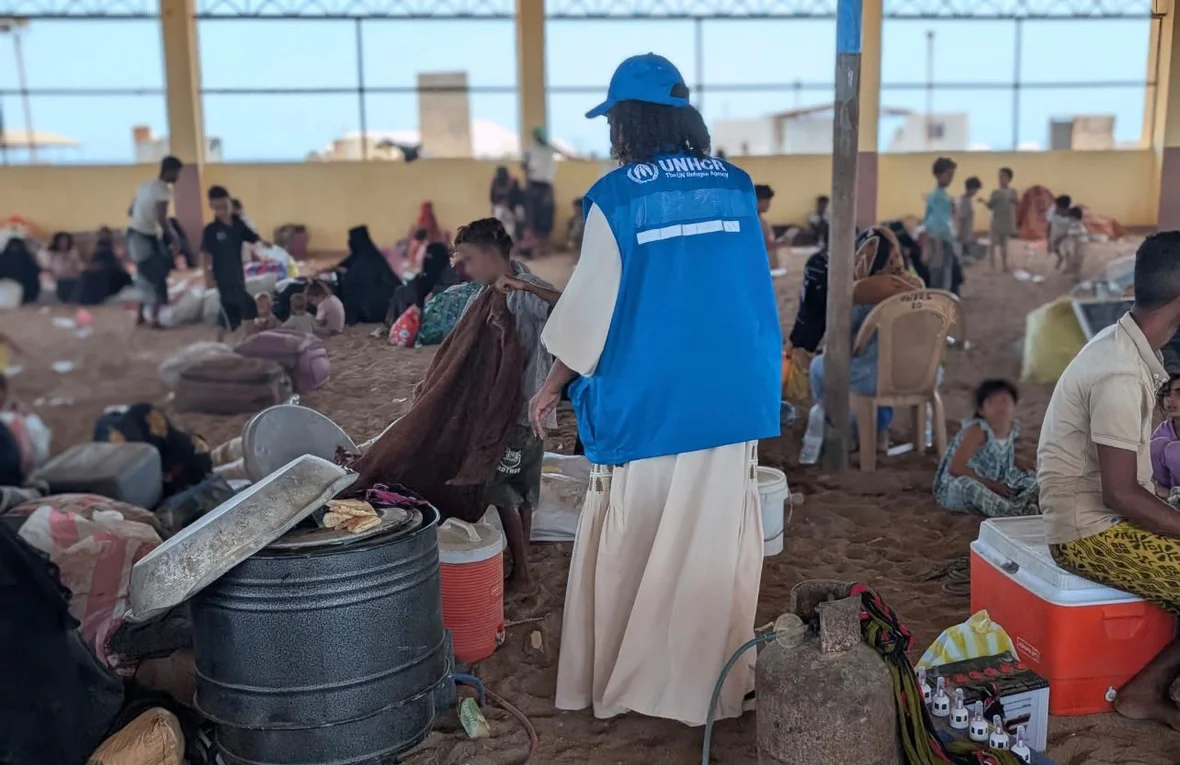
“A UNHCR staff member visits a site in Obock, Djibouti, hosting Yemeni refugee families who arrived by boat after fleeing intensified hostilities on Yemen's western coast.” (source)
If conflict intensified in the Bab el-Mandeb Strait not only would this impact food supply but could cause a major humanitarian crisis. Currently, the port of Mocha which previously had a large UN contingent, has now been damaged and controlled by Houthi rebels complicating humanitarian assistance and relief to those affected in Yemen by the conflict. Similarly, on the other side of the Red Sea, Sudan and the Horn of Africa heavily relies on its seaports on the coast. If access were blocked not only would this create disruptions in terms of grain imports but would also limit medical supplies and fuel to the region. Djibouti is currently demanding more financial resources and aid as the country predicts that it could be overwhelmed with the amount of people arriving from Yemen, as the country expects that there could be around 10,000 people fleeing from conflict.
Global pressures are already emerging from the escalating strain on oil supplies. As of the 15th of September, Saudi Arabia has halted some oil shipments to Europe, prompting Poland to find alternative oil sources from the North Sea or Algeria. In Syria, protests have broken out in several cities, with demonstrators burning tires after the government raised petrol and diesel prices in response to rising fuel costs- a situation that could further destabilize the country's new government after years of civil war. Similar protests over high fuel costs have taken place in Guatemala, France, Portugal, the Philippines and Indonesia. Energy shortages linked to the U.S.-Israel-Iran War are also affecting Pakistan and Bangladesh, disrupting farmers, garment industries, hospitals and daily life. In the United States – the main initiator of the conflict – the deeply unpopular war, with 69 percent of the population opposing it, is likely to become a major factor for voters as the cost-of-living crisis worsens for the upcoming mid-term elections in November.
The current crisis in the Red Sea and the Bab el-Mandeb Strait cannot be viewed as a single event or another episode in Yemen and Saudi Arabia’s fraught relationship. This conflict reveals how intertwined this narrow strait is with the Strait of Hormuz, global chokeholds, and a larger U.S.-Israel-Iran War. Simultaneously, it reminds us that our global trade networks greatly impact our energy supplies, food systems, humanitarian needs, environmental health and our daily qualities of life. If we fail to connect these dots, we fail to miss the point on how pressures, risks and emergencies reinforce and feedback on one another. Historically the Red Sea and the Bab el-Mandeb Strait have been a strategic region in terms of trade and political dominance; today we are still swayed by its influence as we remain fragilely interconnected.