You Can’t Have a Revolution Without Revolution
Navigating Polycrisis and Political Change in Iran
Dr. Rachel Ainsworth
Research Director for SoDy
You can’t have a ‘revolution without revolution’ was a sentiment expressed by Antonio Gramsci, the Italian Marxist philosopher, in his Prison Notebooks (1926-1937). Gramsci was specifically commenting on the 19th century Italian Risorgimento—the movement for independence and unity—which he characterised as a ‘passive revolution’. For Gramsci a passive revolution was a top-down revolution that strove for a new and modern political course without actually engaging with the will of the people or disrupting the hegemony of ruling factions. Gramsci considered the Risorgimento a passive revolution because the new Italian government failed to get ordinary people politically involved or truly united.
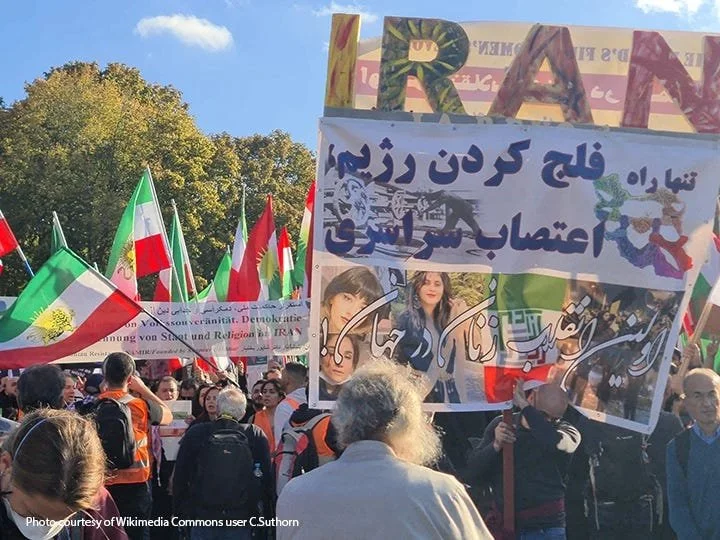
Lately, Gramsci’s observation seems particularly relevant, especially in light of Trump and Netanyahu’s appeals to the Iranian people urging them to seize a “once-in-a-generation opportunity to overthrow the regime” and “take back their country”. For both the US and Israel, regime change has been a central objective in the ongoing conflict with Iran, as evidenced by the assassination of Ayatollah Khamenei and other senior Iranian officials. Although Trump and Netanyahu have called upon the Iranian people to mobilise en masse, it is difficult to interpret these appeals as genuinely reflecting concern for the will of the Iranian populace, rather than serving their own strategic interests in ushering in a new Iranian regime and to position for control over the Middle East.
Why Regime Change in Iran Remains Complex: Historical Legacies, Institutional Intricacies, and the Limits of Force
Political commentators rightly note that targeted bombing campaigns alone never achieve regime change. A recent Politico analysis highlights that history shows bombing’s ineffectiveness in altering a country’s political structure, citing examples from the Korean War, the Vietnam War, the 1991 Gulf War, and the 1998 Kosovo War. So, why should the current Iranian War be any different?
Firstly, you cannot destroy a political and theological ideology through bombing. Iran’s government was not solely governed by the will of Ayatollah Khamenei; rather, it has been deeply rooted in complex political institutions and theological doctrine. The Iranian state features a dual structure: the regular military, known as the Artesh, and the Islamic Revolutionary Guard Corps (IRGC). The IRGC, which possesses intelligence and military capabilities, also plays an important symbolic role as the protector of the Islamic Revolution and the Islamic Jurist. Created by Ayatollah Khomeini after the 1979 revolution, the IRGC answers only to the Supreme Leader and can circumvent the president’s authority, serving as a counterbalance in the event of a coup. However, the IRGC has amassed significant power independently, and even Mojtaba Khamenei, the new Supreme Leader, will be reliant on its support. Within the IRGC, there are reservist paramilitary units called the Basij, which operate locally and are tasked with ruthlessly suppressing dissent. The IRGC’s influence also extends beyond military and political spheres; it is deeply embedded in Iran’s economy, with ties to banking, manufacturing, illicit oil exports, and rural development projects. Consequently, the IRGC still permeates many aspects of Iranian society, complicating the simplistic notion put forward by Trump and Netanyahu that decapitating the head would bring about the collapse of the regime body.

‘Funeral of the martyrs of Minab Primary School for Girls’ (Source)
Beyond Trump and Netanyahu’s performative call for a popular groundswell, Iran has a long history of foreign interference resulting in suspicion among its population of outside intentions. The CIA and MI6’s involvement in the 1953 overthrow of Prime Minister Mohammad Mossadegh remains a powerful reminder. As one woman remarked following the US and Israeli strike that killed Khamenei: “I also cannot be happy because I don’t know what will happen to our country. We saw what happened in Iraq—chaos and bloodshed. I would prefer the Islamic Republic to that situation.” The intense bombardment of Iran and the deaths of 1,348 Iranians (at the time of writing), including the 175 killed—the majority children—in the US missile strike on an Iranian elementary school, has an even greater potential for creating resentment towards both the US and Israel, undermining the prospect of widespread support for regime change.
In December 2025 and January 2026, the world witnessed mass protests against the Islamic Republic, during which the regime horrifically suppressed and killed thousands of men, women, and children (the exact numbers are unknown, but UN Special Rapporteur Mai Sato estimated the death toll could be as high as 20,000). These demonstrations followed earlier protests in 2017-2019 and the 2022-2023 Women, Life, Freedom movement, which erupted after Mahsa Amini’s death in custody for allegedly ‘improper wearing of the hijab’. While many Iranians do not mourn Khamenei’s death—indeed, reports of celebration circulate on the news and social media—the IRGC’s continued presence makes the environment extremely dangerous and a very real threat for political activists. Equally, although many factions are pleased by Khamenei’s demise, a significant portion of the population remains supportive of the regime and regards him as a martyr, as seen in the mass mourning at Enghelab Square in Tehran. The situation’s intricacies, combined with the absence of a clear majority in favour of change, further complicates these issues.
Within revolutionary theory, two crucial aspects for the occurrence of revolution is for the ‘growing alienation and opposition among ruling elites’ and ‘the bridging of popular and ruling elite grievances’. While there are divisions within Iran’s Islamic Republic between hardliners, reformers and within the security echelons, there is, as yet, no clear evidence of ruling elites in the Islamic Republic defecting or merging their grievances with popular protest movements. However, within Iran, political opposition to the regime has been badly fractured. Divide and conquer tactics driven by the Islamic Republic have exploited weaknesses and many leading opponents have been imprisoned. During the most recent protests, pre-revolution flags associated with the Pahlavi dynasty were seen brandished around by protestors, a sign signalling the support for the previous Shah’s son Reza Pahlavi to lead the country. Nevertheless, he remains a polarising figure, and it is improbable that he enjoys broad support within Iran itself—particularly given the enduring memories of repression and human rights violations that occurred under his father’s regime. Given the ongoing gap between popular aspirations and ruling elite interests and the fractured nature of the opposition, conditions in Iran remain deeply unfavorable for the emergence of a broad-based mass uprising currently.
Revolution and Polycrisis: Interwoven Dynamics of Systems
As I have argued elsewhere, revolutions may be understood as the product of multiple, overlapping crises—a polycrisis. Yet it is equally important to recognise that upheavals and crises sparked by military and political interventions—particularly those tied to calls for regime change, whether genuine or merely performative that can be framed under revolutionary moments —can themselves intensify and amplify existing systemic dysfunction across multiple sectors. Given the deep interconnection between systems, the likelihood of cascading and mutually reinforcing crises remains significant. What is clear at present is that Trump and Netanyahu’s intention of constructing an artificial revolution to create regime change has further deepened a polycrisis environment within the Middle East and globally.

Attack on residential homes in Tehran.
(Tasnim News Agency, 4th March 2026. Source)
Since the war began on the 28th of February, the conflict has spread to fifteen countries in the region with all either intercepting or being struck by Iran and its allies. This has caused a humanitarian crisis within the region. In Lebanon more than 700,000 people have been displaced from their homes with around 500 people killed and around 1,000 injured as Israel and Hezbollah continue engaging in fighting. Israel’s use of white phosphorus in munitions fire over civilian areas in Lebanon callously exacerbates the terrible impacts faced by everyday citizens. Similarly, in Gaza, Israel’s closure of key aid entry points has dramatically risen the price of food for the strip. As the World Food Program has mentioned, “Fragile gains achieved following the ceasefire risk being reversed without reliable humanitarian corridors.”
At the same time, with the closure of the Straits of Hormuz, the price of oil had risen to almost $120 a barrel, followed by a slight decrease to now $100. Before the war around 20% of the world’s oil consumption passed through the narrow waters with 100 or more ships a day entering or exiting those waters, now only a handful of vessels have passed through the strait many being attacked in the process. The closure has extreme knock-on effects, as global fertilizer supplies move via the strait, potentially impacting global food security. Closely intertwined are its impacts on the global economy. As oil and gas prices rise, stock prices around the world face serious loses and create a higher risk of stagflation where there is reduced economic growth and rising inflation rates ultimately reducing people’s spending capacity. In places like the US, where daily living costs remain to be a key priority for everyday citizens it’s hard to imagine many are supportive of a war that costs $2 billion a day. As Congress Minority Leader Hakeem Jeffries aptly stated regarding Trump’s war spending costs, “But they can’t find a dime to make it more affordable for the American people to go see a doctor when they need one.” In real terms, cost of living crises could continue to grow globally, eroding countries’ political stability if the war continues further.
This war impacts not only the socio-political and economic spheres but also has significant environmental repercussions. Israeli airstrikes targeting Iran’s oil production facilities pose an immediate threat of contaminating food, water, and air, as highlighted by statements made by the World Health Organization Director Tedros Adhanom Ghebreyesus. This was emphasized by toxic rain falling on the capital of Tehran impacting citizens’ health. Similarly, war and bombing produce a large-scale global emissions footprint exacerbating the climate crisis. For instance, in research shown by Queen Mary University, the emissions from the first 120 days of the war in Gaza exceeded the annual emissions of 26 individual counties. And in terms of life sustaining resources, Iran is further experiencing, an extreme drought with its capital Tehran facing a day zero water crisis -meaning potable water supply is drastically restricted. With continued war, there is a devastating potential to jeopardize critical water infrastructure not only in Iran but in other parts of the Middle East, just recently Iran bombed a desalination plant in Bahrain.
The Limits of an Engineered Revolution and the Enduring Power of Grassroots Resistance
I keep finding myself drawn to Gramsci’s idea of passive revolution—the top-down revolution that fails to promote popular mass-driven action—and the attitude that you cannot have a ‘revolution without revolution’. US and Israeli attempts to engineer a revolution have only intensified interconnected crises, strengthening a larger polycrisis situation. The old adage, “Be careful what you wish for,” feels particularly relevant here, towards Trump and Netanyahu’s reckless pursuit of regime change. Something Trump should take heed of, as Cuba’s government seems like the next likely target.
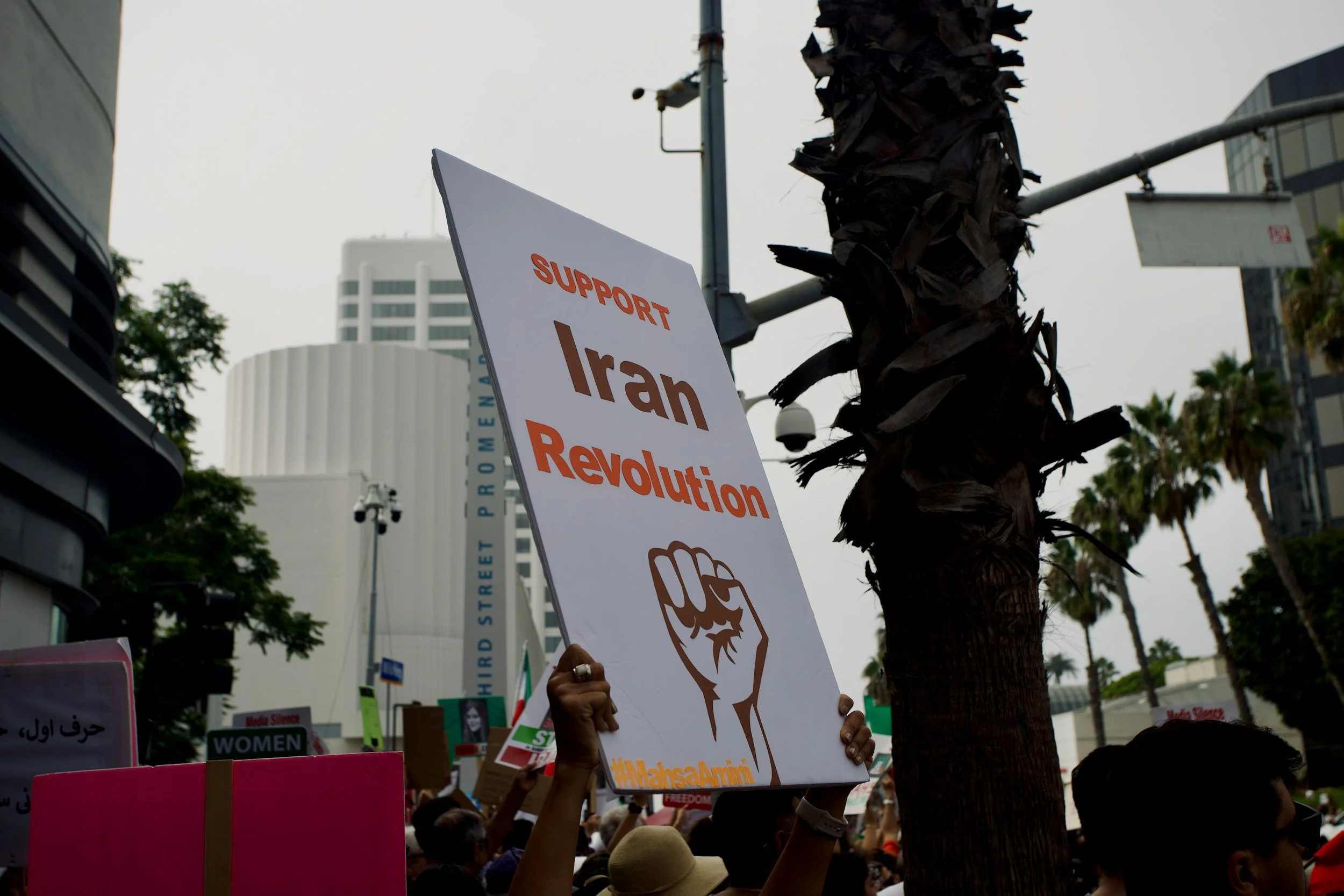
Upon considering the nature of revolution, it becomes clear that resistance lies at its very core. Gramsci observed that within any revolutionary process there must be ‘experimental risk’: a sustained, dynamic struggle that gradually undermines the dominance of the ruling class. This can be understood as “the abstract expression of the effort made, the practical way of creating a collective will” (SPN: 438). Considering the recent Iranian protests, spanning from 2017 to the present, can we not recognise these moments as revolutionary acts in themselves? Tens of thousands of demonstrators—especially women—have bravely taken to the streets, demanding human rights, justice, and a new political direction, despite the real dangers of arrest, injury, or death. This spirit of experimentation and resistance, irrespective of whether it ultimately succeeds in toppling leadership, is at the very heart of revolution. To dismiss these actions as mere failures because the regime was not overthrown, or only removed through external intervention, is to overlook their true and real significance and diminish the real sacrifice of those who have died, been injured or detained. Perhaps it is more apt to view the recent popular Iranian protests against their oppressive regime in the manner of Hakim Bey, who regards resistance as a source of creative possibility and as part of the “‘ongoing ‘revolution of everyday life’: the struggle that cannot cease even with the last failure of political or social revolution, because nothing except the end of the world can bring an end to everyday life, nor to our aspirations for the good things, for the Marvelous.” In this perspective, the spirit of Iranian resistance endures, offering hope that meaningful change remains possible—even amidst adversity. Therefore, we must make the distinction between the very real revolutionary potential and resistance that exists in Iran and the revolutionary structural conditions for regime collapse; the former truly exists but the latter remains elusive at present and external intervention makes the latter more complicated.
A revolution requires the voice of the Iranian people—it cannot be manufactured or imposed. Having endured decades of hardship, caught between Western geopolitical manoeuvres and the brutal repression of their own government, the Iranian people deserve to choose their nation’s future with dignity and autonomy. The events unfolding in Iran and across the region demonstrate that externally driven efforts to force change rarely address the deep-rooted socio-political complexities at play. Instead, such interventions often aggravate existing tensions and trigger wide-ranging crises, affecting not only politics and society but also the broader economic and environmental landscapes. Ultimately, only a movement grounded in the aspirations and unity of the Iranian people can navigate the intricate challenges faced by the nation and lay the foundation for lasting equitable transformation.