Can we eat our way out of Polycrisis?
And SoDy’s partnership with the Canadian Centre for Food & Ecology
Dr. Daniel Hoyer
SoDy Founder & Director
We are undoubtedly mired in a global polycrisis. Reminders of just how precarious things have become seem to crop up every single day, from climate catastrophes to economic instability to horrific, prolonged armed conflicts. There is a lot of discourse around the "unprecedented" nature of our times, and while this is true in some respects—the sheer scale of our global interconnectivity is indeed novel in human history—there are far more historical precedents to our current maladies than most people realize.
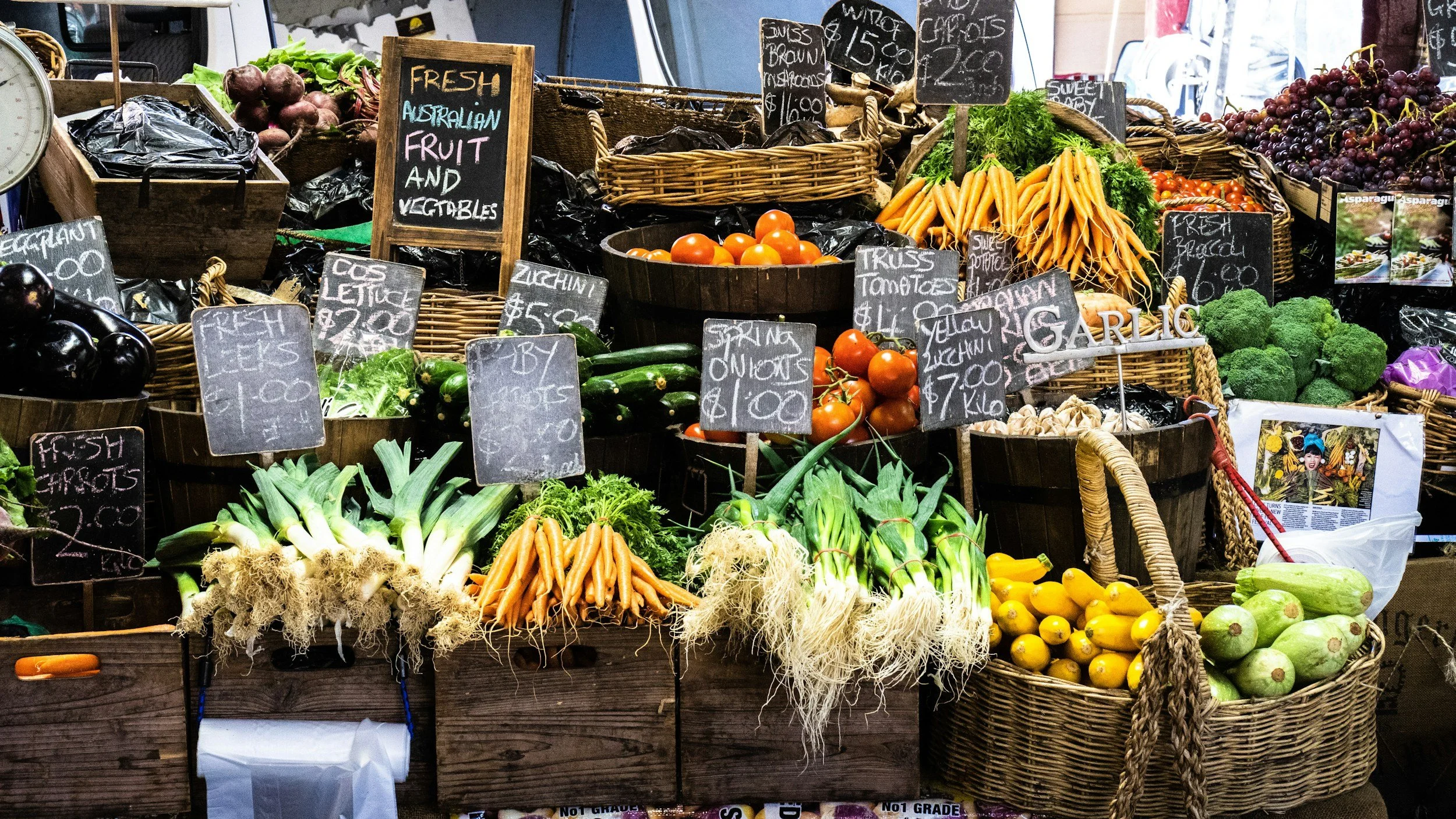
Local produce at a food market
At Societal Dynamics (SoDy)—the historical policy lab—it is our job to know these precedents. We study the rise and fall of past societies to understand the structural forces that drive human flourishing and societal collapse. We use these insights to help us navigate today's challenges, not only adapting historically-attested interventions, but honing in on exactly where entirely new solutions are needed, and what they must look like.
Consider, for instance, the era of the Black Death, a time of widespread suffering throughout Europe and parts of Asia and Africa. The era is rightly known for the vicious impact of the Bubonic Plague, which spread in repeated waves over a long period and decimated over half of some society’s populations at its height.
The plague, though, was not the era’s only crisis. Indeed, we have argued that this was a polycrisis-like period, featuring a host of interconnected crises persistent over a long period: An unstable and unpredictable climate (part of the Little Ice Age event) leading to severe ecological shocks, rampant conflict, and massive disruptions to food system disruptions, all setting the stage for the rapid spread of disease and and the staggering loss of life that resulted. Unfortunately, these bear many similarities to our modern age.
Wicked problems in search of wholesome solutions
A polycrisis, whether in the past or today, is a wicked problem. This is because it involves so many things going wrong at once, but also because these systems are causally entangled. Each calamity, each disruption, each crisis feeds the others, creating a cascade of negative effects that can feel overwhelming and unstoppable; what many would call a vicious spiral.
We find ourselves a long way down such a spiral, which seems to have been building momentum for some time now. But that does not mean we cannot change course. We must find ways to transition from this vicious spiral into a virtuous circle. To put it another way, the way to combat a wicked problem is with interventions that put some ‘wholesomeness’ into the way that these systems function, shifting us towards more sustainable, justice-promoting, and regenerative outcomes to help us navigate this polycrisis we find ourselves in.
Some of these shifts will undoubtedly be large-scale, big-picture items, like global climate agreements or strict planetary boundary regulations. But many of the most vital shifts will need to start as seemingly small, localized changes that work their way up the impact ladder. Our food system is a perfect example of this.
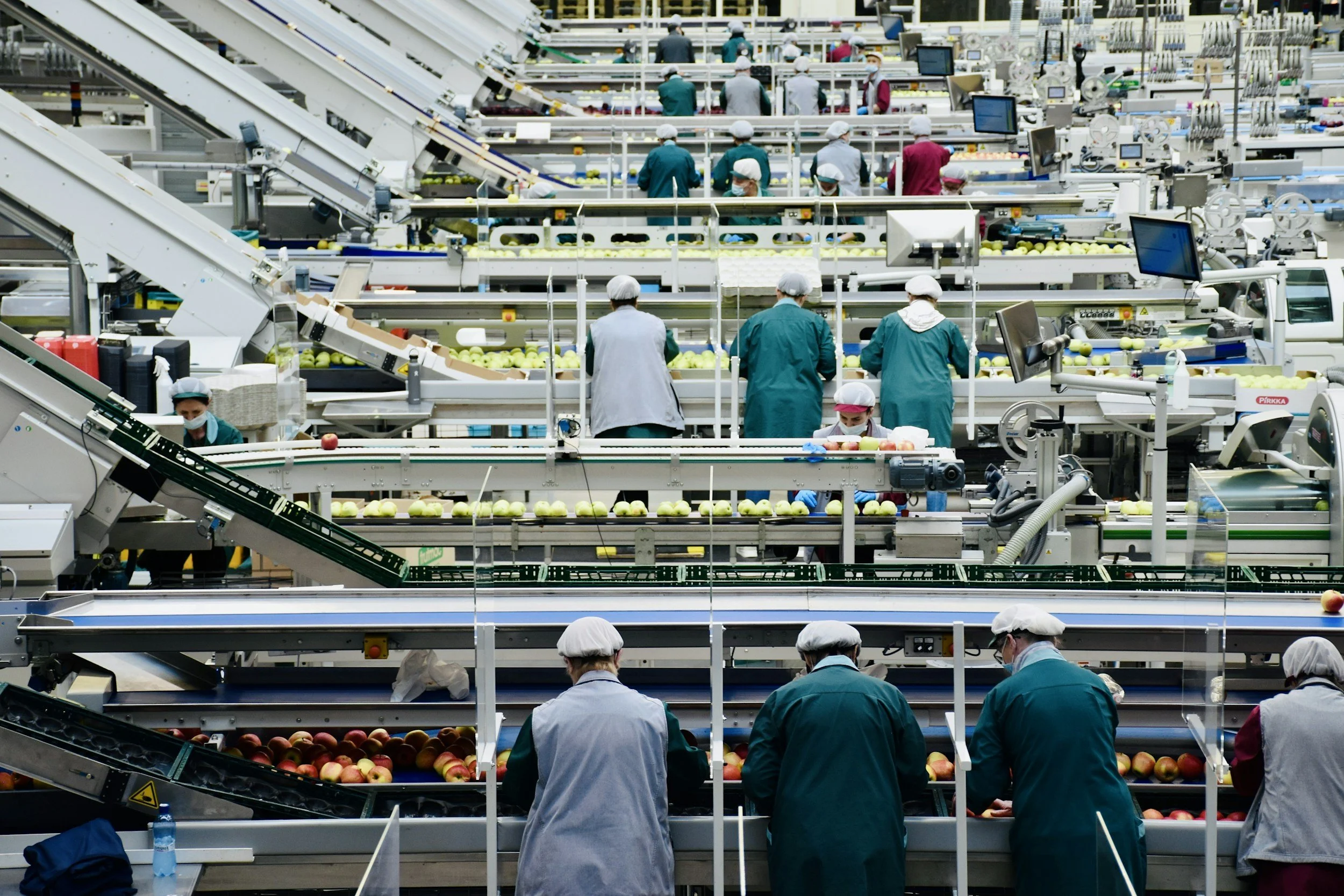
The hyper-industrialization of global food production has led to increasingly severe consequences.
Food system change as ‘nexus shift’
It is no exaggeration to say that our current food system is implicated in nearly all of the ills brought by our modern polycrisis. The hyper-industrialized, extractive way that our food is produced and transported is driving the breach of at least five planetary boundaries. Despite massive caloric output, health outcomes for many remain poor, and food insecurity is rampant, even in wealthy nations. These failings intersect with other social injustices in many countries as well, with historically marginalized groups bearing the brunt. Our global supply systems have been revealed in recent years to be highly vulnerable to disruption, which can lead to scarcity and skyrocketing inflation that leaves working families in a desperate state. People are left wondering if they can afford to feed their families while also managing to pay rent and rising healthcare costs. Ultimately, our energy-intensive and globally entangled food supply systems, and the ease with which they can be disrupted, are a major component of the affordability crises we see in many Global North countries today. But food is more than just material sustenance or a commodity to be optimized for profit. It is a social good. It is one of the primary aspects of life that can bring people together, sitting down to share a delicious and wholesome meal. This helps us build bonds, establish community, and simply share joy with families, friends, neighbours, colleagues, and really anyone we come across. This has always been true and always will be, no matter what our food systems look like. These benefits are far from trivial. They are the essential underpinnings of social cohesion, which is an absolutely critical ingredient in allowing societies to navigate difficult challenges and implement needed reforms when times get tough. Food, thus, shines as one of the few areas at the nexus of so many of our currently vexed and fragile social and environmental systems. But by the same token, transforming our food system also has the capacity to generate good through every one these same systems. And it doesn’t even need to be a major, global overhaul to start seeing these benefits; even small, local shifts can bubble into significant impacts.
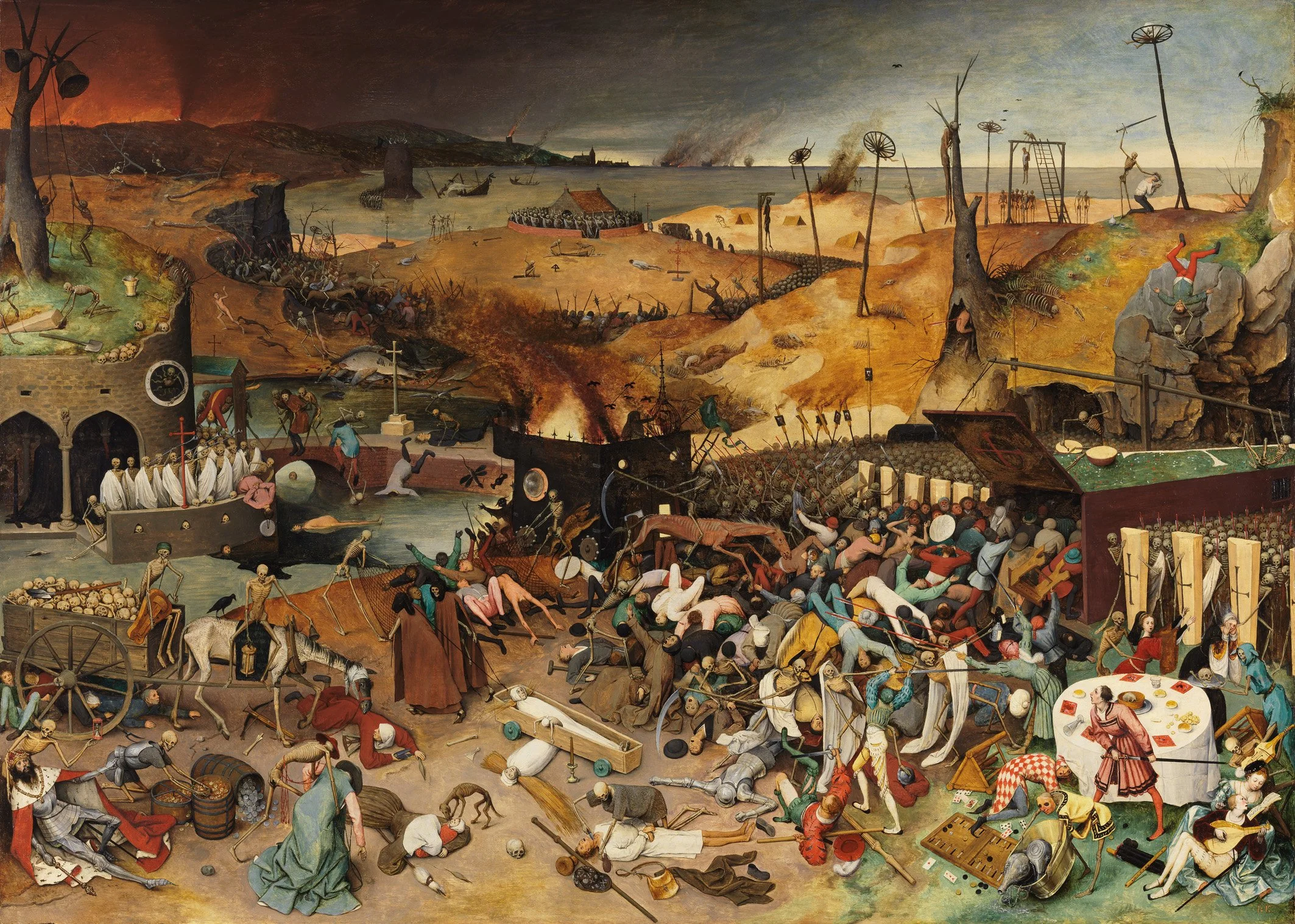
The Triumph of Death by Pieter Breugel the Elder (1562)
The historical perspective: small shifts with outsized impact
Our historical work at SoDy shows clearly time and again how a shift in one area of life can have far reaching and unexpected consequences.
Take the Black Death example once more. This was certainly not primarily a ‘food story’, though food systems were implicated in many aspects of the period’s turmoil, just as in modern times. As noted, the abnormally colder climate caused myriad ecological disruption throughout the region, from flash floods to hurricanes to prolonged droughts and even major locust swarms. These events disrupted food production in many societies, leading to malnutrition and poor health for large populations, making them particularly susceptible to the spread of plague.
The repeated bouts of violent conflict both within and between societies is also, at least in part traceable, back to these food system disruptions and the unrest that widespread hunger and suffering brought. These conflicts often interrupted trade routes, exacerbating the food supply issues. Again, these crises appear as a vicious cycle, not unfamiliar to us in the modern world.
In response to these polycrisis-like ills, some countries, especially those in Northern Europe like England and the Netherlands, fell on some significant reforms that had a major impact on their recovery from the Black Death era and subsequent development, with rippling effects on global history.
In these countries, labour shortages in combination with ecological strain left major deficits in agricultural production, which was by far the biggest economic sector of the age. To combat this, landowners began providing much more favourable terms for their tenant farmers as a way of maintaining production. This led not only to the regeneration of critical food supplies, but also to improved livelihoods for these tenant farmers and their families.
With their basic needs securely met, these tenant farmers were then able to leverage their improved standing into increased voice within the halls of power, leading, slowly but inevitably, to the deployment of more inclusive and representative forms of governance. Population booms led to increased urbanization, which spurred the rise of industrial production. Indeed, these agrarian reforms inaugurated at the end of the early modern period are often credited not only with sparking the industrial revolution, but with setting the stage for the modern, democratic nation-states we are familiar with today.
I don’t want to push this link too far. Clearly, our modern food systems and economic contexts are much different than late Medieval England. And not all of these changes had positive impacts on the well-being of populations, as early industrial economies were extremely exploitative and often created hazardous working conditions, not to mention the colonial and imperial expansions these industrial economies promoted with ethnocidal consequences for colonies populations.
The critical lesson to take away from this historical example is simply that ostensibly minor, localized shifts in how food was produced, primarily in terms of how those producing food were treated, generated myriad other shifts across the economic, political, and social systems, and eventually spilled out into other countries as well.

Tomatoes from Dan’s city-balcony garden!
Regenerating societal fibres one meal at a time
To replicate this kind of impact, we need to find these kinds of small-but-generative shifts in our systems which are currently under crisis. Food offers perhaps the best, most connected, and most pliable avenue, at least in many wealthy global north countries.
Just as in England’s recovery from the Black Death, shifting relations between landowners and tenant farmers was a critical first-mover, but needed coupled reforms in political representation and other economic changes before the full impact of these shifts could be felt. To transform our food system, then, we likewise need to address all aspects of our modern food system together.
Much effort and many resources are being put into reforming food systems globally, but the focus remains squarely on changing how food is grown; how it is transported, made available, and in particular changing what people demand from their food have been largely overlooked. We will need to shift our focus from viewing the food system as a siloed issue with siloed solutions, to recognizing it as a cross-cutting issue ready for cross-cutting solutions. We need to move away from an extractive model that degrades societal value to a regenerative one that creates it. And we must move away from an exclusive focus on supply-side optimization to an expanded focus on demand-side solutions that empower local communities.
This is exactly what the new project by the Canadian Centre for Food & Ecology (CCFE) aims to do. Their Greater Tkaronto Bioregion (GTB) Regenerator Pilot offers a focused, action-oriented plan centered on sparking joy with flavorful experiences for select communities throughout Toronto.
By focusing on community-level food experiences, the CCFE is laying the groundwork for the exact kind of social cohesion and regenerative practices that history shows are necessary to reverse a polycrisis. The GTB Regenerator project is exactly what we need to be trying right now. They are fit for purpose for the interconnected challenges our polycrisis is placing before us, and they are firmly supported by the lessons of history.
The GTB Regenerator is only a pilot at this point. Its scope and aims are relatively constrained. But don’t let its localized scope fool you; it has the potential to become a guiding light, showing the way for major systemic impact throughout Canada and beyond. This is why SoDy is so incredibly proud to partner with the CCFE on this crucial work.
We might not be able to eat our way out of this polycrisis completely. But if we start delivering wholesome, healthful, sustainably and equitably produced food, with the joyful experience that comes from every bite we will help build community, strengthen our social bonds, and start to regenerate our dysfunctional systems.